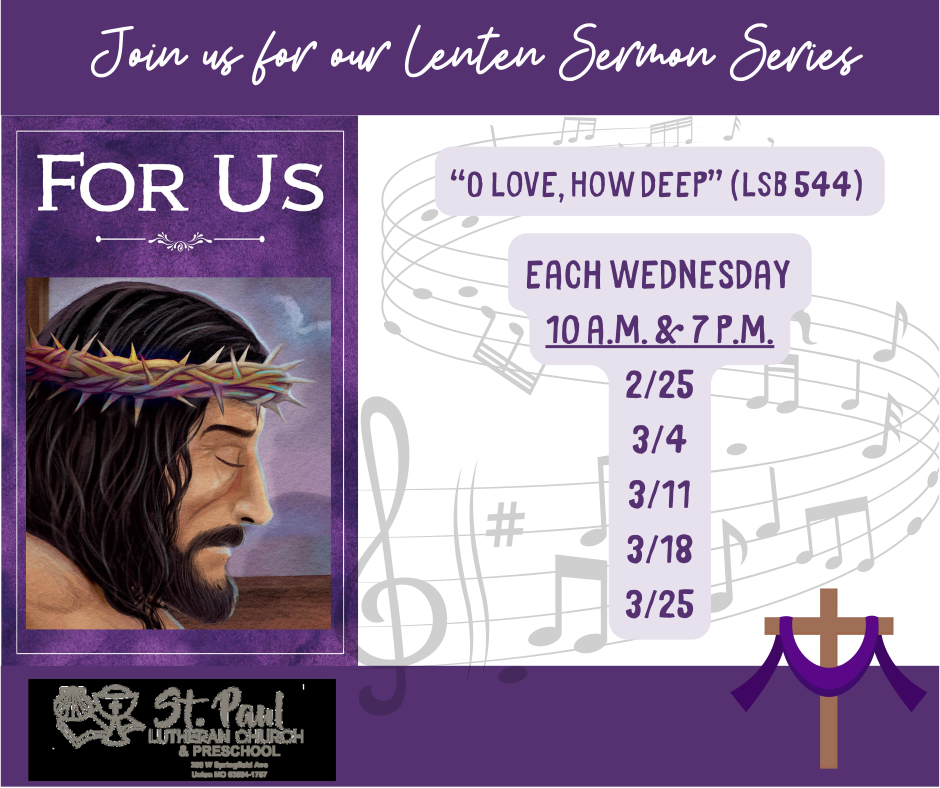
For Us
“For us” is not simply a pithy line to use because it is easy to repeat. It is a confession of who God is and what He brings in giving us His Son. It helps us understand why God would send His Son to die for us.
The phrase “for us” also captures much of the Reformation’s theological emphasis—and Luther’s understanding of Scripture in particular. Luther went from searching for a righteous God and finding only stern rebuke to seeing God in the form of a little baby and as the one who became one of us for us so that we might become like Him.
Our Lenten preaching series hymn “O Love, How Deep” (LSB 544) was originally a twenty-three-stanza poem written in the fifteenth century by an unknown author. In the nineteenth century, an Anglican cleric named Benjamin Webb translated the hymn into English and then chose six stanzas for use in English hymnody. The doxological stanza was added later.
Some hymns tell a story, others teach, and still others create pictures in our minds of the great works of God. Some hymns do all three, weaving together a tapestry that is beautiful yet simple, wondrous yet easy to understand. “O Love, How Deep” is that kind of hymn.
Although it does not appear in the first stanza, the most pointed and beautiful language in the hymn is expressed in the phrase “for us.” The phrase is reminiscent of the language of the Nicene Creed: “Who for us men and for our salvation came down from heaven.”